How to Run Walk-Up Music at Youth Games
Everything the team parent on speaker duty needs to know, learned the hard way over a few seasons.
Updated August 2026

Walk-up music is the cheapest upgrade in youth sports. For the cost of one speaker, every game feels like a big-league event, kids sprint to the plate instead of shuffling, and the bleachers pay attention. But there's a right way to do it, and there's a way that gets the speaker banned by the second inning.
Step 0: Clear it with the league
- Ask before the first game. Most rec leagues are thrilled; some restrict music to between innings or pre-game. Tournaments often have their own rules, so check the coaches' packet.
- Clean edits only, no exceptions. One explicit lyric near the wrong grandparent ends the program for everyone. Screen every song yourself; "the radio version" claims from 12-year-olds require verification.
- Never play over live action. Music stops before the pitcher toes the rubber. Umpires have absolute authority here, and the fastest way to keep the privilege is never making them use it.
Get the timing right
- 10–15 seconds per batter. That's the walk from the on-deck circle to the box. Anything longer holds up the game, and anything shorter feels like a mistake.
- Start at the hook, not the beginning. Most songs take 30+ seconds to get going. Set each clip's start point at the most recognizable moment so the kid gets the good part.
- Fade the music out. A hard stop mid-beat sounds like something went wrong. Even a quick one-second fade sounds intentional.
- Announce, then play. "Now batting, number 12…" followed by the music beats music alone. It's the intro that makes kids feel famous.
How loud is loud enough?
You're aiming for the batter and the bleachers, not the neighboring subdivision. A good rule of thumb: the far dugout should hear it clearly, and the next field over shouldn't be able to name the song. Aim the speaker at your own bleachers from slightly above head height, and see our speaker guide for placement and gear that carries without being cranked to distortion.
The game-day checklist
Still collecting songs? Send families our printable walk-up song request form before you build the lineup. It includes parent approval, clean-edit confirmation, and backup choices.
- Speaker charged the night before (and the phone running the music).
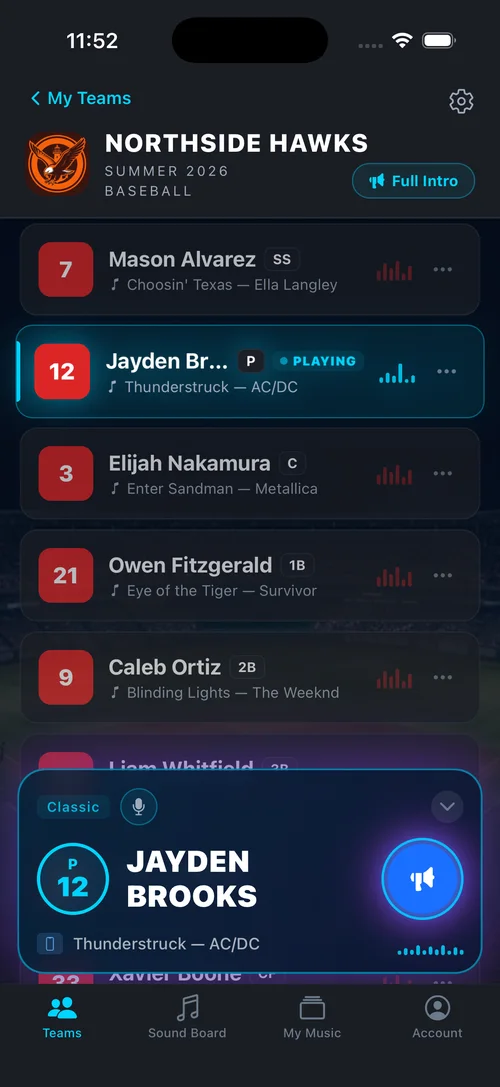
- Lineup entered with each batter's song and start point set.
- Bluetooth paired before warmups, not during the first at-bat.
- Phone on Do Not Disturb, because nobody wants to hear a text notification through a 160-watt speaker.
- Volume check with one song before the umpire's briefing.
- A designated backup parent who knows how to run it when you're coaching first base.
Make it about every kid
The best part of walk-up music isn't the star player's at-bat. It's the kid batting ninth hearing their song and their name over the speaker for the first time. Let every player pick from a parent-approved shortlist (start here), keep every intro the same length, and give the bench players the same production value as the cleanup hitter.
Do it right and you'll hear about it all season, from the kids and from parents on the other team asking how you set it up.